City of the Taj
Agra, popularly known as the City of the Taj, is one of the most iconic and historically magnificent cities in the Indian state of Uttar Pradesh and one of the most visited tourist destinations on earth. The city was founded in 1475 by Raja Badal Singh, a Sikarwar Rajput king, and is located on the western banks of the sacred River Yamuna in the southwestern corner of Uttar Pradesh.
Agra has been at the heart of some of the most significant events in India's history — from ancient times to the modern era — shaped profoundly by its role as one of the early capitals of the Mughal Empire under Babur, Akbar, Jahangir, and Shah Jahan. Often referred to as the Mughal City, Agra attracts millions of visitors from across the world every year for its incomparable architectural heritage and its status as home to the most celebrated monument in human history.
The earliest citation for Agra comes from the mythological era, where the epic Mahabharata refers to Agra as 'Agravana' meaning paradise in Sanskrit — and Ptolemy, the famous second-century AD geographer, was the first to refer to Agra with its modern name. Akbar the Great raised the towering ramparts of the Great Red Fort and made Agra a centre for learning, arts, commerce, and religion — while Shah Jahan gave Agra its most prized monument, the Taj Mahal, built in loving memory of his wife Mumtaz Mahal and completed in 1653.
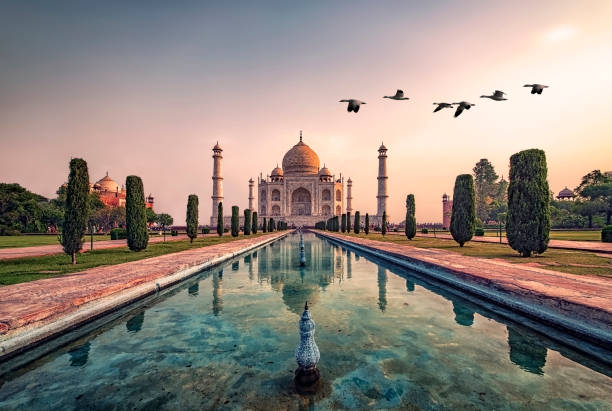
The iconic Taj Mahal — a UNESCO World Heritage Site and one of the Seven Wonders of the World — stands majestically on the banks of the River Yamuna as one of the most perfectly proportioned and emotionally powerful monuments ever built. Agra is also home to extraordinary heritage landmarks like Agra Fort, Fatehpur Sikri, and the Tomb of Itimad-ud-Daulah.
Agra is famous for its:
The Taj Mahal alone attracts over 7 million visitors every year — making Agra one of the most visited cities in all of Asia. Its timeless Mughal monuments, rich artisan traditions, romantic riverside setting, and proud status as the crown jewel of India's famous Golden Triangle — connecting Delhi, Jaipur, and Agra — make this extraordinary city a truly once-in-a-lifetime destination for every visitor to India.
Agra is a historic city in the Indian state of Uttar Pradesh and one of the world's most popular tourist destinations. It is popularly known as the City of the Taj because it is home to the Taj Mahal — one of the Seven Wonders of the World and the most visited monument in India — drawing millions of visitors from every corner of the globe every year.
Badal Singh has been said to have founded Agra in 1475, and Delhi Sultanate ruler Sikandar Lodi made it his capital after another 29 years. The city, situated on the banks of the River Yamuna, was later chosen by Mughal Emperor Akbar as his capital — and it was Shah Jahan's loving memory of his wife Mumtaz Mahal that saw him gifting Agra its most loved and famous monument, the Taj Mahal.
What makes Agra a truly exceptional and culturally rich destination is a total of three UNESCO World Heritage Sites — the Taj Mahal, the Agra Fort, and Fatehpur Sikri — a concentration of world-class heritage in a single city that is unmatched anywhere in India. Popular attractions like the Taj Mahal, Agra Fort, Fatehpur Sikri, and the Tomb of Itimad-ud-Daulah attract over 6 million tourists every year. The city has been a vibrant hub of culture, art, and architectural magnificence for centuries — and Agra's story is not just in stone but in the aroma of its bustling bazaars, in its colourful crafts, and in the warmth of its culture. Agra is well known as the crown jewel of India's famous Golden Triangle tourist circuit connecting Delhi, Jaipur, and Agra — and is celebrated for its Mughlai cuisine, marble inlay handicrafts, leather goods, and the iconic Taj Mahotsav cultural festival held every February.
Agra offers a perfect blend of world-famous Mughal monuments, serene riverside gardens, ancient temples, and vibrant bazaars that together make it one of the most extraordinary cities on earth. Here are the top sightseeing places you should explore in the City of the Taj.
Taj Mahal
Agra Fort
Fatehpur Sikri
Tomb of Itimad-ud-Daulah (Baby Taj)
Mehtab Bagh
Jama Masjid Agra
Agra is not only home to the world's most famous monument but also to a remarkable collection of museums, art galleries, and cultural institutions that preserve the extraordinary artistic and architectural legacy of the Mughal Empire. Here are the top Museums & Art Galleries you must explore in the City of the Taj.
Taj Museum — Inside the Taj Mahal Complex
Agra Fort Museum — Archaeological Survey of India
Agra Art Gallery
Kala Niketan Art Gallery
Dayal Bagh Spiritual Museum
Marble Inlay Craft Studios — Living Museums of Mughal Art
Agra is a city that celebrates its festivals with the grandeur and cultural richness befitting the former capital of the Mughal Empire — each fair and festival here reflects the extraordinary heritage, artistic traditions, and spiritual depth of this iconic city on the Yamuna. Here are the top Fairs & Festivals you must experience in the City of the Taj.
Taj Mahotsav
The Taj Mahotsav is Agra's most iconic and celebrated festival — a spectacular 10-day cultural extravaganza held every year in February at the Shilpgram complex near the Eastern Gate of the Taj Mahal. The Taj Mahotsav Festival is said to invoke the memories of the Mughal era and the prevalent 18th and 19th-century Nawabi styles — providing opportunities for over 400 artisans from different parts of the country to showcase their artworks. The festival commences with a splendid Mughal-style procession featuring bedecked elephants, richly adorned camels, drumbeaters, and folk artists — and is the best place to witness marble inlay work, wood carvings from Saharanpur, brass wares from Moradabad, handmade carpets of Badohi, blue pottery of Khurja, Chikan work of Lucknow, and the silks of Banaras all in one spectacular setting. Ghazal and Mushairas (poetry) performances are further highlights of the festival, while children delight in camel and elephant rides — making Taj Mahotsav a truly unmissable celebration for every visitor to Agra in February.
Ram Barat Festival
The Ram Barat Festival is one of Agra's most uniquely theatrical and deeply beloved celebrations — a spectacular re-enactment of the divine wedding procession of Lord Rama held as part of the broader Ram Lila festivities before Dussehra in October. This elaborate marriage procession of Lord Rama features grandly decorated chariots, elaborate costumes, and lively performances recreating the mythical wedding of Lord Rama and Sita. The procession takes around 8 to 10 hours to reach its designated location where the marriage ceremony is conducted with great celebration — a wonderful festival through which visitors can experience the life and times of Lord Rama in an extraordinary and immersive way. At a special venue set up as the palace of Goddess Sita and Raja Janak — called Janakpuri — beautifully decorated jhankis form the base of the fair, visited by thousands of devoted followers of Lord Rama who come to witness the royal wedding.
Bateshwar Fair
The Bateshwar Fair is one of the most significant and spiritually charged traditional fairs in the entire Agra region — held annually in October and November at the sacred town of Bateshwar, 70 km from Agra. Named after the presiding deity Bateshwar Mahadeo — this town is known for its cultural and spiritual significance as it is home to 108 temples dedicated to various Hindu gods and goddesses. During this month-long event dedicated to Lord Shiva, thousands of devotees take a dip in the holy waters of the River Yamuna — and a lively Livestock and Cattle Fair is held alongside, with the festive atmosphere extending all the way to Agra city itself. The fair is one of the largest livestock fairs in northern India and offers a fascinating window into the rural culture, agricultural traditions, and religious devotion of the Braj region surrounding Agra.
Kailash Fair
The Kailash Fair is Agra's most beloved local religious fair — held annually at the Kailash Temple situated on the banks of the sacred River Yamuna, 12 kilometres from the city centre. Held in honour of Lord Shiva, the fair is lively with thousands of devotees offering prayers, participating in rituals, and singing devotional songs — while the air buzzes with stalls selling sweets, handicrafts, and trinkets, creating a vibrant festive atmosphere. The Kailash Fair is both a religious gathering and a colourful community carnival — embodying the deep spirit of faith, joy, and communal togetherness that has defined Agra's cultural life for centuries. The riverside setting adds a particularly atmospheric dimension to the fair, with the sound of devotional music mingling with the gentle flow of the Yamuna under the glow of earthen lamps at dusk.
Holi — Festival of Colours
Holi in Agra and the surrounding Braj region is celebrated with a fervour and joy that is entirely unique in India — drawing visitors from across the world who come specifically to experience the legendary Holi traditions of the land of Lord Krishna. The nearby towns of Mathura, Vrindavan, Barsana, and Nandgaon — all within 60 km of Agra — are the epicentres of India's most spectacular Holi celebrations, with the week-long festivities beginning as early as Basant Panchami. In Agra itself, streets fill with colour, temples hold special celebrations, and the city's bazaars overflow with gulal, sweets, and the infectious energy of one of the world's most joyful festivals. The proximity to the Braj region makes Agra the ideal base for experiencing Holi across multiple destinations — from the famous Lathmar Holi at Barsana to the flower Holi at Vrindavan's Banke Bihari Temple.
Diwali at the Taj
Diwali in Agra reaches its most magical and emotionally resonant expression against the backdrop of the illuminated Taj Mahal — one of the most breathtakingly beautiful festival settings anywhere on earth. The city of the Taj Mahal has four Shiva temples on four sides — devotees venerate Lord Shiva on all four Mondays of the Sawan month during the Parikrama and Sawan Melas, and the entire city embraces Diwali with special lighting and community celebrations across its ancient ghats and bazaars. The Yamuna ghats are lined with thousands of earthen diyas on Diwali night, and the reflection of their golden light on the sacred river beneath the white marble dome of the Taj creates a scene of extraordinary beauty that no photograph can fully capture — making Diwali in Agra one of the most unforgettable festival experiences in all of India.
Agra is surrounded by magnificent UNESCO World Heritage Sites, sacred pilgrimage towns, royal palaces, wildlife sanctuaries, and the legendary cities of the Golden Triangle — making it perfectly located for exciting one-day excursions. Here are some of the best excursions from the City of the Taj.
1. Fatehpur Sikri
2. Mathura & Vrindavan
3. Bharatpur Bird Sanctuary (Keoladeo National Park)
4. Gwalior — Fort City of Central India
5. Jaipur — The Pink City
6. Delhi — Capital of India
Agra is not just about the Taj Mahal — it is also one of the most vibrant shopping destinations in Uttar Pradesh, offering everything from leather goods and marble handicrafts to silk sarees and Zardozi embroidery. During festivities, one can see Agra in its full fervor — decorated and selling its delectable delicacies like Petha, Gajak, and Dalmoth alongside artefacts, figurines, and handlooms that reflect the city's extraordinary Mughal heritage.
Sadar Bazaar
Kinari Bazaar
Shilpgram Crafts Village
Marble Inlay Shops — Fatehabad Road
Subhash Bazaar & Shahganj Market
Must-Buy Items in Agra
Agra's cuisine is a flavourful reflection of its history — once the seat of the Mughal Empire, Agra inherited a royal blend of Persian and North Indian flavours, and the Agra food scene today still carries that regal influence with rich gravies, slow-cooked meats, fragrant biryanis, and exquisite sweets. Here is your guide to Restaurants & More in the City of the Taj.
Peshawri — ITC Mughal Sheraton
Esphahan — The Oberoi Amarvilas
Pinch of Spice
Dasaprakash Restaurant
Joney's Place
Must-Try Food & Street Eats in Agra
Agra is one of the best-connected tourist cities in India — easily accessible from Delhi, Jaipur, Mumbai, and all major Indian cities by air, rail, and road. Here is your complete guide on How to Reach the City of the Taj.
By Air
By Train
By Road
Local Transport in Agra
Best Time to Visit Agra
Agra tour packages are popular among travelers looking for Mughal heritage sightseeing, historical monuments, cultural experiences, and North India holidays. Packages range from short 1-day Taj Mahal trips to complete Golden Triangle tours including Delhi, Jaipur, Fatehpur Sikri, and Mathura.
1. Agra 2 Nights / 3 Days Package
Usually includes:
Typical inclusions:
Average price:
2. Agra Taj Mahal Weekend Package
Usually includes:
Typical inclusions:
Average price:
3. Golden Triangle Tour Package
Usually includes:
Typical inclusions:
Average price:
Agra is perfectly located for exciting one-day excursions to heritage cities, Mughal monuments, wildlife destinations, and spiritual towns. Here are some of the best day trips you can enjoy from Agra.
Distance from Agra: ~40 km
Travel Time: Around 1 hour
Why visit:
Distance from Agra: ~60–75 km
Travel Time: Around 1.5–2 hours
Highlights:
Distance from Agra: ~55 km
Travel Time: Around 1–1.5 hours
Why visit:
Distance from Agra: ~230 km
Travel Time: Around 3–4 hours
Highlights:
Distance from Agra: ~75 km
Travel Time: Around 1.5–2 hours
Why visit:

Agra is famous for the Taj Mahal, one of the Seven Wonders of the World and a UNESCO World Heritage Site. The city is also known for Mughal architecture, forts, marble handicrafts, and rich historical heritage.
Popular tourist attractions in Agra include the Taj Mahal, Agra Fort, Fatehpur Sikri, Mehtab Bagh, and Itmad-ud-Daulah.
The best time to visit Agra is between October and March when the weather is pleasant for sightseeing and outdoor activities.
A 2 to 3-day trip is usually enough to explore Agra’s historical monuments, local markets, and nearby attractions comfortably.
Yes, Agra is one of India’s top heritage tourism destinations because of its Mughal monuments, royal architecture, and UNESCO World Heritage Sites.
Tourists can enjoy monument sightseeing, photography, shopping for marble handicrafts, food tours, cultural experiences, and heritage walks during their visit to Agra.

Start your royal journey with exclusive savings. We'll get back to you within 24-48 hours.


Your details have been successfully submitted. Our travel experts are currently reviewing your request and will get in touch with you shortly.
Please keep an eye on your email or phone for further updates. We’re excited to help you plan a memorable journey!
If you need immediate assistance, feel free to reach out to us anytime.
Call Or WhatsApp Us: +91 92575 05272 Or Email Us: sales.tripmyrajasthan@gmail.com